
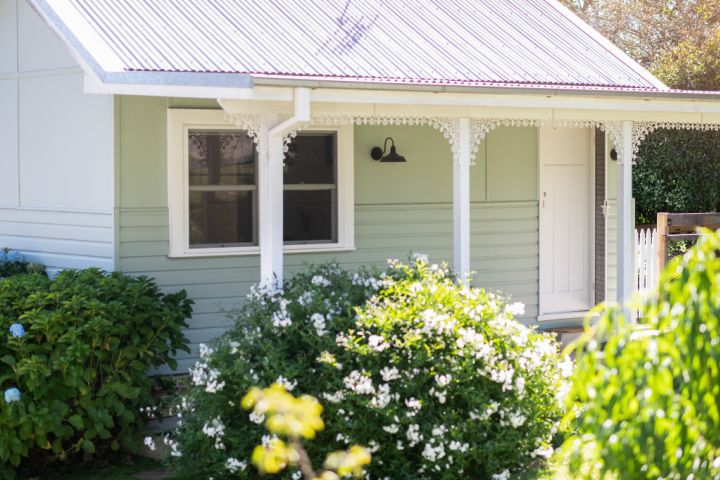
The Downsizing Dilemma: Why Australia has 13 million empty bedrooms
Australia’s housing crisis has long been framed as a problem of undersupply, with a chronic shortage of new homes failing to keep pace with population growth. However, a provocative new argument from a leading economist challenges this conventional wisdom, suggesting the nation’s real issue isn’t a lack of dwellings, but a staggering glut of unused space – specifically, an estimated 13 million empty bedrooms.
Dr. Eleanor Vance, a Senior Fellow at the Australian Institute of Economic Research, posits that while headlines decry the struggle for affordable housing, a deeper dive into demographic trends and property utilisation reveals a profoundly inefficient use of existing housing stock. Her research indicates that an aging population, coupled with a preference for larger homes, has created a significant surplus of bedrooms across the country.
The Core Argument: An Abundance, Not a Shortage
Dr. Vance’s analysis, presented at a recent economic forum, draws on census data and housing surveys. “We’ve become fixated on the ‘supply gap’ in terms of new builds, but we’re overlooking the vast untapped potential within our current housing footprint,” Dr. Vance explained. “Based on our calculations, if we consider the average number of bedrooms per dwelling against the average household size, we uncover a colossal mismatch. There are approximately 10.8 million private dwellings in Australia. With an average of 3.8 bedrooms per dwelling and an average household size of 2.5 people, this leaves a theoretical surplus of 1.3 bedrooms per home. Multiplied across the nation, that’s roughly 13 million bedrooms that are consistently unoccupied.”
The Demographic Shift and Housing Mismatch
The economist attributes this phenomenon largely to an aging population and changing family structures. As children grow up and leave home, older Australians often remain in large family houses, becoming ’empty nesters’ in properties far exceeding their current needs. Simultaneously, cultural preferences have shifted towards larger homes, even for smaller households, contributing to the underutilisation of space.
“Many Australians want to age in place, and rightly so,” Dr. Vance stated. “But the current system often incentivises them to stay in oversized homes. Stamp duty, capital gains tax implications, and a lack of suitable, appealing downsizing options mean that moving to a smaller, more appropriate dwelling can be financially and emotionally prohibitive.”
Economic and Social Ramifications
The existence of 13 million empty bedrooms carries significant economic and social implications. For one, it contributes to urban sprawl and increased infrastructure costs, as new developments are pushed further to the city fringes while existing, well-located properties are underutilised. It also exacerbates the perceived housing shortage, driving up demand and prices in a market that, according to Dr. Vance, isn’t truly lacking physical space but rather accessible, appropriately sized space.
Furthermore, this inefficiency has environmental consequences, as larger homes require more energy to heat and cool, and the constant push for new construction consumes more resources and land. It also limits opportunities for multi-generational living or shared housing arrangements that could foster stronger communities and alleviate cost-of-living pressures for younger generations.
Policy Pathways for Better Utilisation
Dr. Vance advocates for a paradigm shift in housing policy, moving beyond a sole focus on new builds to actively encourage better utilisation of existing stock. Her proposals include a suite of incentives and regulatory adjustments aimed at unlocking these empty bedrooms.
Addressing the “Empty Nest” Challenge
“We need to make downsizing a genuinely attractive option,” Dr. Vance suggested. “This could involve significant stamp duty concessions for older Australians moving into smaller, more accessible properties, or linking aged care funding to a commitment to right-sizing their homes. We also need to see a greater supply of well-designed, smaller dwellings – apartments, townhouses, and granny flats – in established suburbs, not just on the urban fringe.”
Other recommendations include reviewing planning regulations to make it easier for homeowners to subdivide large blocks or convert parts of their homes into secondary dwellings, thereby creating more affordable rental options. She also points to potential reforms around property taxation that could disincentivise holding onto excessively large, underoccupied properties.
A Broader Conversation
While Dr. Vance’s arguments offer a compelling new lens through which to view Australia’s housing challenges, they do not negate the complexities of the issue. Critics might point to the geographic mismatch – that empty bedrooms in regional areas don’t solve housing shortages in Sydney or Melbourne – or the persistent issue of housing affordability for those struggling to enter the market, regardless of overall bedroom count.
However, her research undeniably sparks a crucial conversation about efficiency, sustainability, and the true nature of Australia’s housing dilemma. By shifting the focus from simply building more to intelligently utilising what we already have, policymakers might uncover a powerful, overlooked solution to a problem that has long plagued the nation.
The notion of 13 million empty bedrooms challenges the fundamental assumptions driving Australia’s housing debate, urging a re-evaluation of strategies and a bolder approach to unlocking the potential within our existing communities.
Source: Read full article


Leave feedback about this