
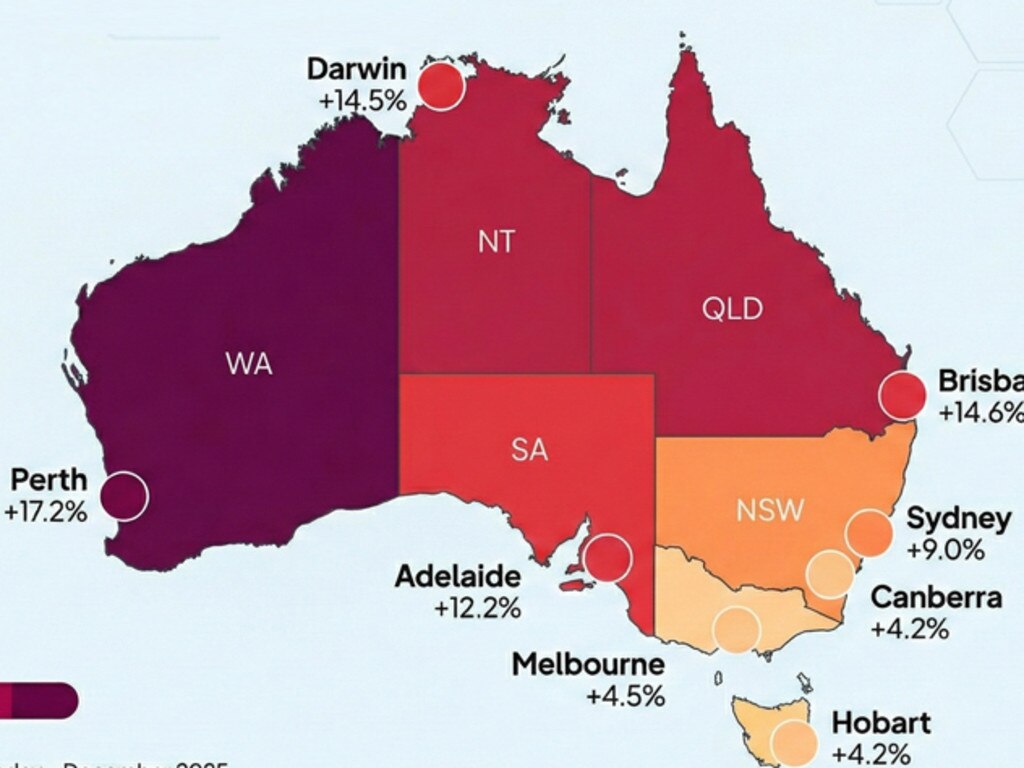
Property Prices Still Growing in Most Australian Suburbs Despite Rate Fears
Australia’s property market continues to navigate a complex landscape, defying widespread expectations of a significant downturn in many areas. Despite a series of interest rate hikes by the Reserve Bank of Australia (RBA) and persistent global economic uncertainty, new data reveals that property prices are still experiencing growth in the majority of Australian suburbs. However, this resilience masks a shifting market where certain regions are beginning to feel the pinch, with prices in some suburbs experiencing notable declines.
A Market of Two Halves: Widespread Growth Amidst Headwinds
The latest analysis indicates a robust underlying demand for housing across much of the nation. While the pace of growth may have moderated from the unprecedented boom periods of recent years, the market’s overall trajectory remains upward for a significant proportion of suburbs. This sustained growth is largely attributed to a combination of factors, including ongoing supply shortages in key areas, strong employment figures, and a return of international migration, which is bolstering demand.
Market analysts suggest that while higher interest rates have undoubtedly impacted borrowing capacity and buyer confidence, the desire for homeownership and investment properties remains strong. Many established markets, particularly those with desirable amenities, good infrastructure, and proximity to employment hubs, are demonstrating remarkable stability and continued appreciation. This suggests that while credit conditions have tightened, the fundamental drivers of property value in these locations are holding firm.
Identifying Suburbs Facing Price Declines
Despite the prevailing trend of growth, the market is far from uniform. A crucial aspect of the current climate is the emergence of specific suburbs where property prices are indeed beginning to plunge. These areas often share common characteristics, making them important for prospective buyers and sellers to identify and understand. Suburbs experiencing the most significant contractions typically include those that saw unsustainable, rapid growth during the pandemic-driven boom, potentially leading to overvaluation.
Other vulnerable areas include those with a higher proportion of highly leveraged homeowners, who are more susceptible to the impact of rising mortgage repayments. Additionally, some outer-fringe suburbs or specific segments of the unit market, particularly those with an oversupply of new developments or less unique appeal, are showing signs of weakness. These areas may lack the intrinsic demand drivers that are insulating more established or lifestyle-oriented locations from price falls.
Factors Influencing Localised Declines
The disparity in market performance can be directly linked to how different regions absorb the cumulative effect of rising interest rates and broader economic pressures. Higher borrowing costs disproportionately impact buyers at the lower end of the market or those stretching their budgets to enter less established areas. This can lead to reduced buyer pools and, consequently, downward pressure on prices.
Furthermore, local economic conditions, job security, and population dynamics play a critical role. Suburbs experiencing job losses, reduced local investment, or outward migration are more likely to see a softening in demand and a subsequent decline in property values. The shift away from work-from-home mandates in some sectors might also be influencing demand for properties in certain regional or outer-suburban areas that experienced a surge in popularity during the pandemic.
Navigating the Evolving Landscape
For individuals looking to buy or sell, understanding this nuanced market is more critical than ever. Real estate experts advise a thorough investigation into local market conditions rather than relying solely on national averages. “The Australian property market is not a single entity; it’s a collection of thousands of micro-markets, each with its unique supply-demand dynamics,” explains one leading property analyst. “While many areas are showing resilience, it’s vital for consumers to drill down into suburb-specific data and understand the local drivers of value before making significant financial decisions.”
Prospective buyers should exercise caution in suburbs identified as being at higher risk of price depreciation, conducting extensive due diligence on recent sales, future development plans, and local economic indicators. Conversely, sellers in these areas may need to adjust their price expectations to reflect the current market reality. For those in growth areas, the market continues to offer opportunities, albeit with a more measured pace than previously observed.
In conclusion, Australia’s property market remains dynamic and complex, characterised by a surprising level of resilience in most suburbs even as interest rates climb. However, the emerging pockets of price decline serve as a crucial reminder that the market is undergoing a significant rebalancing. Vigilance, detailed local research, and professional advice are paramount for anyone looking to navigate this evolving landscape successfully in the months ahead.
Source: Read full article





Leave feedback about this